Tuesday, September 13, 2005

The Point of Visiting the Holy Places

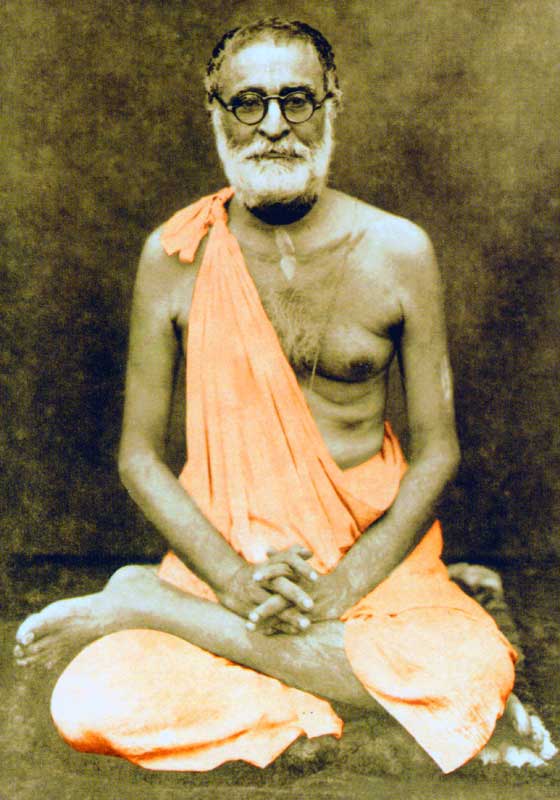
It is not necessary for the sadhu to perform the extraneous circumambulation of Braja for attaining the sight of Godhead. The pure soul is eternally in the Realm of the Supreme Lord.

The mundane tract of the countryside that is trod by every passerby must not be confounded with the Highest Sphere of the Realm of the Absolute. It is not the glorification of any mundane locality, cause or person for which the devout pilgrim sets out on the Parikrama of Sri Brajamandal under the lead of the sadhu [devotee, spiritual master]. Those who turn their attention to the landscape and the external features of the Object of worship or choose to regard the bath and the journey, eating and sleeping, as identical with the spiritual function, gain very little by their laborious journey.

The whole attention of the pilgrim has to be given not to the landscape nor to any shrine or figures. It is least of all necessary for him to attend to the activities of himself. It is imperative to turn all his attention to the minutest doings and sayings of the sadhu under whose direction he has chosen to perform the devotional journey. If he goes on indulging his own fancies and viewing with his own eyes the entities on the spiritual plane he may, indeed, succeed in deluding himself but he will assuredly miss the only legitimate object of his pilgrimage. If he attends and acts up to the instructions of his spiritual guide and does not allow himself to be directed by any other consideration, he will automatically find himself on the plane of archana in course of the performance of his spiritual journey, by the unsolicited and causeless grace of the sat-guru (bona fide spiritual guide).

The very first principle, therefore, which all intending circumambulators should accept in their heart of hearts is to attend fully to the instructions of the bona fide guide and prefer following them to every other occupation. If he tries to do so, he will find that the bona fide guide will put him to activities which may be neither such as are to his liking nor what he had previously arranged for. The sat-guru will upset all his prearranged plans. The pilgrim is not expected to be allowed to guide himself in any way. It is the nature of the conditioned soul to be tempted to assume his own guidance however much he may profess to be guided by another.

It is not the journey but the method of its performance that really matters. Any journey that is performed under the lead of the sadhu is a spiritual function. No journey that is not so performed can have any spiritual value. The circumambulation of Sri Brajamandal has the further advantage of spiritual association which are of great help to the novice on the path of spiritual endeavour. The novice is in a position on such occasions to be put in mind by the sadhu that he is never to attend to the scene at all, because what he will see if he does so is not the thing which he should see but something else, the sight of which will be obstructive of the real function for which he is out on his pilgrimage. The sadhu himself will see everything very carefully and minutely, but he will never encourage the novice to any function of the kind. If the novice submits to be so thwarted at almost every step and is prepared to do whatever the sadhu tells him to do with loyal faith, he will have gained the real object of his pilgrimage.

It is for the purpose of inspiring a real regard for the transcendental realm of Braja in the minds of the circumambulators that the function has been manifested by the sadhu. The mundane realm enables the sadhu to do this in a concrete way. In the realm of Braja it is not jivas [us, the living entities] who enjoy the landscape. It is Krishna who is the Sole Enjoyer of that Realm. The jivas have no other function but to minister to the Pleasures of Krishna. The landscapes of that Realm are instinct with perfect spiritual life. They direct their denizens in their constant service of Krishna. The sadhu is the whole-time servant of Krishna. He can understand the directions of the spiritual realm that does not manifest its responsive nature to the eclipsed consciousness of conditioned souls. The sadhu alone is thus in a position to employ the conditioned soul in the service of the Realm of Braja, although the latter is necessarily not fully aware of the same till after he has been freed from all obscurity of vision.

It may of course be asked why the mundane landscape should be at all necessary for the spiritual purpose. To this the reply is that the land of Braja is specially privileged for being used by the sadhu for his purpose. Mundane landscape is no doubt different from the spiritual realm. But the mundane in this case has a quasi-spiritual value as soon as it is used by the sadhu for kindling the spiritual consciousness of dormant souls.

The full spiritual process is not devoid of distinctive features. So much so is this the case that the abstract mental function is the furthest removed from the spiritual. Those, therefore, who choose to suppose, for no reason whatsoever, that the nature of the difference between the spiritual and mundane resembles that between the mental and physical, are, by reason of this very initial misunderstanding, prepared to disown with special vehemence any spiritual value of the gross mundane landscape. These persons are however much more condescending to the claims of the mental process to be regarded as being in close proximity to the spiritual.

But as a matter of fact, neither the mental nor the physical process can have any spiritual quality of its own. Such a quality may be impressed on either by the Grace of Godhead. The land of Braja has been endowed with this privilege by the fact of the Appearance of Sri Krishna, Who performed His All-Holy Pastimes there. Why should it be altogether impossible for theists to believe in the privileged nature of the land of Braja in view of the above fact? The land itself is not spiritual. It will not benefit any person if he serves the inanimate landscape of Braja by the resources of his mundane nature. The guidance of the sadhu, however, needs must be allowed to make a vital difference, as it enables even the conditioned soul to be used in the quasi-spiritual service of the transcendental realm of Braja apparently to an external observer in terms of the mundane landscape. But the service of the mundane tract of Braja is not thereby rendered identical with the quasi-spiritual service (archan) of the transcendental Realm under the guidance of the sadhu who uses the privileged mundane tract for the purpose of enabling conditioned souls to obtain the unconscious service of the transcendental realm.

Those who choose to suppose that they are enabled to serve the transcendental realm of Braja by simply residing in the mundane District of Muttra [Mathura] or by following mechanically any course of ceremonials laid down in the Scriptures under the guidance of persons who have themselves no access to the spiritual plane, are no less deluded than those stubborn atheists who do not believe in the testimony of the revealed Scriptures or affect to regard the Scriptures as the concoctions of the fertile imaginations of barbarous peoples. The perusal of this discourse cannot materially benefit either description of persons.

The worship of Godhead can have only the character of an eternal quest of the Truth in consonance with the principles of transcendental epistemology. Those who take this mundane existence to be identical with the transcendental are either fools or knaves. It is of course possible for persons with a dull intellect to accept (?) anything and everything 'on trust' (?). But this kind of innocent (?) stupidity will not help any person in arriving at the real Truth. [Please note that the question marks are put there by the author, Srila Bhaktisiddhanta Sarasvati Thakur.] Nor can any person find the Truth by means of his intellect alone. But that also is no argument in favour of the least neglect of intellectual alertness on the path of spiritual endeavour. The Truth makes His Appearance to the pure cognitive faculty. He refuses to appear to the non-cognitive aptitude. The reason why the intellect cannot find truth is not that it is disposed to exert itself but that it does not do so in the proper manner and with sufficient thoroughness. The legitimate function of the intellect in approaching the Absolute is of a receptive nature. The intellect of man commits an offence against itself the moment it attempts to comprehend the incomprehensible by its own resources. This type of aggressive intellectualism is the mother of atheism and is not less harmful than even deliberate stupidity.

It is possible to desire to have the perfectly receptive attitude towards the Truth, waiting for Him to take the initiative for enabling us to find Him. This waiting for the Truth is the only real form of the quest after the Truth. To a person with such bona fide receptive disposition, the Truth reveals Himself to the extent that is sufficient for enabling him to continue the quest in a successful manner. The success consists in this: that such a person is able to distinguish between the Truth and non-Truth when either of them presents itself to him for his receptive acceptance. He is also enabled by the quest to recognise those persons who are bona fide seekers of the Truth. He is thereby enabled to cultivate their society by the method of receiving enlightenment from their words and deed. All this, however, does not mean that the seekers of the Truth can actually trod the spiritual plane itself. Neither can he be regarded as being wholly confined to the mundane plane. He is quasi-free. He is said to be free even in this life (jivan-mukta) by the Scriptures.

Sri Krishna Chaitanya exhibited the ideal of conduct of a person who has been favoured by the gift of love to the feet of Krishna by the grace of the sadhu. He did not perform His pilgrimage under the lead of any other person. He gave an explanation of the cause of His Own peculiar conduct to Prakashananda, the atheistical pedantic leader of the sannyasins of Kashi of His day. He said in effect that He was a wholly ignorant and dull-headed person. Sri Gurudeva took pity upon Him for His extreme dullness and told Him that it would not be possible for such a foolish person to profit in any way by the study of the Vedanta. He was instructed to take the Name of Krishna instead. As He did so, in a short time He experienced a great change of disposition. It was no longer possible for Him to control His own Activities. The Name of Krishna entirely mastered His Whole Self and made him dance, sing, cry and in short behave like one mad. He was alarmed by the appearance of those symptoms and repaired to His Guru and submitted to him His condition. His Guru told Him that he was most fortunate in having such a disciple as the symptoms were those of a person in whom love for Krishna manifests itself by the Grace of the Holy Name. His Guru then explained to Him that the Name of Krishna has a power to excite love for Krishna if He is chanted without offence, and that love for Krishna is the one thing needful for the soul and the end of all spiritual endeavour.

When love for Krishna makes its appearance in the spiritual essence of the perfectly pure soul, such a person forgoes all inclinations for any form of sensuous activity of both the gross and subtle varieties. He is then entitled to visit the realm of Braja. He is also impelled to do so by his irrepressible love for Krishna. But he finds the realm of Braja itself in mourning in its agony of separation from Krishna. The sight only serves to still further augment his own sorrow.

There is thus no change of mood for the lover of Krishna when he is in the realm of Braja. He does not find Krishna in the realm of Braja, but meets instead the denizens of the place undergoing grief of separation from Krishna like himself. Krishna is not to be found in this world in this age. This is a matter of life and death to the person who really loves Krishna. There can be no happiness nor solace for such a person during his sojourn in this world. He is never happy in any other sense even by his residence in the land of Braja.

The circumambulation of the realm of Braja has no significance for anyone except those who really love Krishna. Those who love Krishna can alone understand how the ceremony was performed by Sri Chaitanya. Unless one takes the Name of Krishna in the manner that is free from offence revealed by Sri Chaitanya as the Divine Dispensation for this Age of Discord (Kali-yuga) by His Conduct and Teachings, one can attain to no real love for Krishna. A true follower of Sri Chaitanya is therefore alone entitled to perform the spiritual pilgrimage of the realm of Braja.

Sri Chaitanya is Sri Krishna Himself, who alone is the source of His Own Service. Sri Chaitanya is Sri Krishna exhibiting the mood of love for Himself. The mood of love is only the exterior of Sri Chaitanya. But this exterior is not less absolute than the Inner Personality who is no other than Krishna Himself. Krishna is also Chaitanya. The Master is the source of His Own Service. Krishna, as the source of love of Himself, is Chaitanya. The two aspects of the Divine Personality are not complementary, but are IDENTICAL. Sri Krishna is eternally served by the denizens of Braja. He is thus served in a visible form in the Dwapara Age in this world. Sri Krishna is also served in a visible form in the Kali Age. In Kali Age He is served as Sri Chaitanya by the denizens of Sri Navadwip, which is identical with the White Island (Shvetadwip) of the Scriptures. The service and associates of Sri Krishna Chaitanya are identical with those of Sri Krishna. The service of Sri Krishna Chaitanya alone is attainable in the Kali Age. Those who aspire to the service of Krishna in this Age have no other alternative but to serve Sri Krishna Chaitanya. Unless they are fully prepared to do so, they are bound to go astray and be betrayed into a course of sensuous activities under the garb of religion.


Archana —spontaneous worship of God, devotional service
Sri Brajamandal—the holy place associated with Krishna's childhood pastimes on earth 5,000 years ago, also called Vrajamandala or simply Braja or Vraja, and including those places still existing today as Mathura, Vrindaban, Govardhana, Nandagram, etc.
Sri Krishna Chaitanya—incarnation of Krishna who appeared 500 years ago in Navadwip, Bengal and inaugurated a spiritual revolution by re-introducing the chanting of the holy names of God: Hare Krishna, Hare Krishna, Krishna Krishna, Hare Hare/ Hare Rama, Hare Rama, Rama Rama, Hare Hare
Dwapara Age—the 3rd age of the cycle of a Maha-yuga, and the age preceding this Kali Age; its duration said to be more than 4,320,000 years
Sri Gurudeva—Sri Ishvara Puri, spiritual master of Chaitanya Mahaprabhu
Jivan-mukta—the soul liberated from repeated birth and death in this material world
Kali Age—also called Kali-yuga, the Age of Quarrel, the age in which we are now living; it is said to last 432,000 years, of which approximately 5,000 years have already passed
Sri Navadwip—the birthplace of Chaitanya Mahaprabhu, located in Bengal, India; it is regarded as nondifferent from Shvetadwip, the abode of Maha Vishnu
Parikrama—journey to and 'round the holy places.
Sannyasins—renunciates or renounced monks, those who have taken a vow of celibacy and detachment from family life
Vedanta—the body of literature commonly called the Vedas, but including besides the 4 Vedas, also the Upanishads, Puranas, Vedanta Sutra, Mahabharata, Ramayana, Bhagavad-gita and other supplementary literatures

Thursday, July 21, 2005

Forward to Sri Brahma-samhita

The materialistic demeanor cannot possibly stretch to the transcendental autocrat who is ever inviting the fallen conditioned souls to associate with Him through devotion or eternal serving mood. The phenomenal attractions are often found to tempt sentient beings to enjoy the variegated position which is opposed to undifferenced monism. People are so much apt to indulge in transitory speculations even when they are to educate themselves on a situation beyond their empiric area or experiencing jurisdiction.

The esoteric aspect often knocks them to trace out immanence in their outward inspection of transitory and transformable things. This impulse moves them to fix the position of the immanent to an indeterminate impersonal entity, no clue of which could be discerned by moving earth and heaven through their organic senses.

The lines of this booklet will surely help such puzzled souls in their march towards the personality of the immanent lying beyond their sensuous gaze of inspection. The very first stanza of this publication will revolutionize their reserved ideas when the nomenclature of the Absolute is put before them as "Krsna." The speculative mind would show a tendency of offering some other attributive name to designate the unknown object.

They will prefer to brand Him by their experience as the "creator of this universe,""the entity beyond phenomena"--far off the reference of any object of nature and void of all transformation. So they will urge that the very fountainhead should have no conceivable designation except to show a direction of the invisible, and inaudible untouchable, nonfragrant and unperceivable object. But they will not desist from contemplating on the object with their poor fund of experience.

The interested enquirer will be found to hanker after the records left by erudite savants to incompatible hallucinative views of savage demonstration. In comparing the different names offered by different thoughts of mankind, a particular judge would decide in favor of some nomenclature which will suit best his limited and specific whims. The slave mentality of an individual will no doubt offer invective assertions to the rest who will be appealing to him for a revelation of his decision. To remedy this evil, the hymns of the accepted progenitor of the phenomena would do great help in taking up the question of nomenclature which is possessed of adequate power to dispel all imaginations drawn out of their experiencing the phenomena by their tentative exploitations.

The first hymn will establish the supremacy of the Absolute Truth, if His substratum is not shot by the bullets of limited time, ignorance and uncomfortable feeling, as well as by recognizing the same as an effect instead of accepting Him as the prime cause. He will be satisfied to mark that the object of their determination is the par"excellent Supreme Lord Sri Krsna who has eternally embodied Himself in His ever-presence, all-blissful, all-pervasive perfected knowledge as the very fountainhead of all prime causes of unending nonbeginning time, the supplying fosterer of all entities, viz., mundane and transcendental.

The subsequent lines will go to determine the different aspects of the Absolute, who are but emanations of the supreme fountainhead Krsna, the attractive entity of all entities. Moreover, the derivative proclamation of the nomenclature will indicate the plane of uninterrupted, unending, transcendental felicity and the nomenclature Himself is the source of the two components which go by the names of efficient and material causes.

The very transcendental name "Krsna" is known as the embodiment of all the transcendental eternal rasas as well as the origin of all eclipsed conceptions of interrupted rasas found in the mentality of animated beings which are successfully depicted by litterateurs and rhetoricians for our mundane speculation.

The verses of Brahma-samhita are a full elucidation of the origination of phenomenal and noumenic conceptions. The hymns of the incarnated prime potency has dealt fully with the monotheistic speculations of different schools which are busy to give an outer cover of an esoteric concoction without any reference to the true eternal aspect of transcendental nontransformable and imperishable manifestation of the immanent. The hymns have also dealt with different partial aspects of the personality of the Absolute who is quite isolated from the conception of the enjoyers of this phenomenal world.

A very close attention and a comparative study of all prevailing thoughts and conceptions will relieve and enlighten all--be he a materialist, a downright atheist, an agnostic, a sceptic, a naturalist, a pantheist or a panantheist--busy with their knowledge of three dimensions only by their speculative exertions.

This booklet is only the fifth chapter of the Hymns of Brahma which were recorded in a hundred chapters. The Supreme Lord Sri Caitanya picked up this chapter from the temple of Adi-kesava at Tiruvattar, a village lying under the government of Travancore, for the assurance of all God-loving, and especially Krsna-loving, people in this conditioned jurisdiction. This booklet can easily be compared with another book which passes by the name of Srimad-Bhagavatam. Though it has got a reference in the pantheon of Puranas, the Bhagavatam corroborates the same idea of this Pancaratra.

The devotees should consider that these two books tend to the identical Krsna who is the fountainhead of all transcendental and mundane entities and has a manifestive exhibition of the plenary variegatedness.

Aspersions of calumniation are restricted in the limited world, whereas transcendence cannot admit such angularities being an angle of 180 degrees or void of any angular discrepancies.
The publisher is carried away to the realm of gratitude when his stores of publication are scrutinized. Thakura Bhaktivinoda has given an elucidatory purport of the conception of the most sublime fountainhead of all entities in Bengali, and one of his devout followers has rendered that into English for propagatory purpose. The purports and the translations are traced to the backgrounds of the writings of Srila Jiva Gosvami, a contemporary follower of the Supreme Lord Sri Krsna Caitanya.

The emotional aspirations will find fair play in perusing the texts of this brochure by one and all who have any interest in pure theistic achievements. The materialistic inspection often goes on to say that the provincial conception of theism has made the depicting of transcendental unity into diverse face quite opposed to the ethical consideration of the limited region. But we differ from such erroneous considerations when we get a prospective view of the manifested transcendentality eliminating all historicities and allegorical enterprises. All our enjoying mood should have a different direction when we take into account the transcendental entity who has obsessed all frailties and limitations of nature. So we solicit the happier mood of the scrutinizers to pay special attention to the importance of manifestive transcendence in Krsna.

It was found necessary to publish this small book for the use of English-knowing people who are interested in the acme of transcendental truths in their manifestive phases. The theme delineated in the texts of this book is quite different from the ordinary heaps of poetical mundane literature, as they are confined to our limited aspiration of senses. The book was found in the South some four centuries ago and it is again brought into light in the very same country after a long time, just like the worshiping of the Goddess Ganges by the offering of her own water.


Siddhanta Sarasvati
Shree Gaudiya Math,
Calcutta, the 1st August, 1932.

Sri Brahma-samhita

Sunday, May 01, 2005

BATSASUR

[The following is an article entitled “BATSASUR” written by Bhaktisiddanta Saraswati Thakura, printed in the “Harmonist” February 1932]

BATSASUR is one of the demons slain by the Boy-Krishna. He represents evils that are peculiar to boyhood. The neophyte is extremely susceptible to such evils. They cannot be got rid of except by the Mercy of Krishna. If one engages in the service of Krishna the juvenile vices are completely eradicated at an early age.

There is an English proverb that sowing of wild oats is inevitable at a young age. The term ‘Puritanism’ was originally coined to express the protest of boys and young men against any undue curtailment of the scope of enjoyment that should be regarded as permissible to them. Boys and young men claim the right to be marry frolicsome. There is nothing objectionable and much that is of positive value in the display of these juvenile qualities. If the attempt be made to stifle this innocent play of the boyish nature under the impression that it is an exhibition of sensuousness and for that reason, as being as harmful as similar conduct on the part of grown-up persons, the result is not assurance but discouragement, of juvenile innocence.

There are, indeed, black sheep and these should not be allowed to taint the whole flock, for this purpose caretakers with full sense of their delicate responsibility are required to keep watch over them for ensuing the innocence of boyhood and youth without killing their joys. But with every precaution it has been found impossible to attain this double purpose.

The Scriptures say that it is not in the power of man to ensure the immunity of boys and girls from the blight of precocious sensuousness except by means of the service of Krishna. This is declared to be the only effective and natural method. Let the boys be exposed to the attraction of the Cow-Boy of Braja. They will soon learn to pick up His company. They will easily realize that the Boy-Krishna can also save them from every form of danger which they are exposed by the ‘right’ of their juvenile nature.

Why should this be so? There is a very simple reason. Krishna does not limit His service only to the middle aged and old people. The Puritanic ideal of Godhead is a conception which owes its origin to persons who are elderly although honestly enough anxious to establish the ‘Kingdom of God’ on this earth. But if you scratch the thin coating on the surface of their sage and sober scheme as befitting their age, you only detect the rotten arrangement for securing the maximum of sensuous enjoyment even for those very children who are to be brought up in this ‘virtuous’ way. If the child is allowed to spoil his health in boyhood, think these righteous people, he will not be in as position later on to enjoy the legitimate pleasures of the grown up man. Unless the Youngman husbands his resources of sense capacity he will also be a victim to premature old age. It is a policy of expediency of postponing a small present enjoyment for reaping a much larger measure of it through the long tracts of the years to come.

The spurious Brahmacharya ideal as misconceived by its worldly supporters embodies this Puritanic outlook. The Scriptures, indeed, enjoin that every one should serve Godhead from the womb. This is the real meaning of Brahmacharya. The ascetic practices that have come to attach themselves to the conception were interpolated into the Scriptures in order to ensure worldly values by this form of the empiric method. The scheme requires that the laws of the growth of the physical and mental bodies should be observed and followed. Nature is regarded as the kind mother who favors only those of her children who cultivate the filial habit of prying into her secrets. Nature is supposed to be unable to avoid divulging her secrets to her inquisitive children although she is well aware that her children will exploit this knowledge for troubling herself by harnessing her to their service. In other works it is also assumed to be the duty of the kind mother to consent to put her in chains in order to minister to the sensuous appetites of her worthier children. Nature is assumed to be able to do good to her children only by submitting to be the victim of their lust.

The practices of asceticism are really conceived in the epicurean spirit. The ascetic dreams of obtaining the mastery over Nature by the method of controlling his senses. If the senses grow callous to the temptation of the world the ascetic thinks that he will have less chance of falling into the power of Nature. He has an idea that when he will have perfected these defensive arrangements he will have become the real master of the situation. The Brahmacharin, according to the ascetic point of view, is to pass through period of training in severe abstinence with his guru in order to be fitted to discharge the duties of citizenship, which will: make a great demand on his nerves and muscles with greater thoroughness. There is no reference to the service of Godhead or to any spiritual issue.

We have had many occasions to explain that the spiritual is transcendental. No mundane consideration can form any part of spiritual training or conduct. It is not a spiritual affair to be even able to control one’s carnal desires. Such self-control is not therefore a function of the soul. The soul has nothing to so with the senses. The soul desires neither sensuality nor sexual purity. The soul is not a mere moral being. If Brahmacharya means a method of gaining moral power it is wholly a mundane affair and is as such not only of no concern to the soul but is positively obstructive of spiritual well-being.

This is bound to be so because the point of view of the soul is all-embracing. The soul rejects nothing. He regards nothing as redundant or useless. The soul has a use for everything. But the soul sees everything as it is really related to himself and to other entities. There is, therefore, no room for the temporary type of morality in his relationships with the other entities. Everything is absolutely good on the plane of the soul. The Scriptural Brahmacharya institution accordingly means service of the Brahmin i.e. the Reality Who is always the Great and always the Help. The servant of the Absolute is free from all delusion.

Morality is a valued commodity only on the plane of delusion. But, it has no locus standi on the plane where the conditions of existence are perfect.

Will the service of Godhead is realized it is impossible to be really moral in the sense of being needlessly and perfectly virtuous. If a person is causelessly virtuous in the worldly sense he or she will be a subject of easy exploitation for all the cunning rascals of this world. This is so because morality as conceived by the empiricist, has a reference to the physical body and the changeable mind and is therefore liable to change so long as the conditions are not radically altered.

The empiric contriver of juvenile welfare strives to produce conditions that will favor the growth and continuance of the empiric moral aptitude. These artificial conditions are confidently enough expected to be likely to prove of permanent benefit to those young persons who are brought up under those impoverished conditions. But the brand of morality that has to be produced by the artificial manipulation of the natural environment is likely to prove of little value when the props are withdrawn. The analogy of needed protection for the growth of the delicate plants does to apply as such plants are always exoterics. Hot-house morality is thus a misnomer and a delusion in relation to the soul.

Brahmacharya fully embodies the substantive ideal of spiritual purity distortedly reflected in the empiric ethical conception. Brahmacharya means service of the Absolute. Juvenile innocence is not the monopoly of young persons, any more than juvenile naughtiness. They are the animal entities corresponding to analogous spiritual qualities. The spiritual activities are perfectly wholesome. They include all value and harmonise all disruptive conflict both of which are so utterly wanting in their mundane pervert reflections to be found in this world.

It is not to be supposed that every this is done by Krishna and there is nothing to be done by Krishna and there is nothing to by done by ourselves in any matter. As a matter of fact there is a division of parts to be played in functions that relates even to ourselves, as between us and Krishna. Certain duties are allotted to us. Certain other functions are reserved to Krishna. Batsasur cannot be killed by us. He is too strong for us. This is in keeping with the experience of most educationalists. Juvenile innocence is a necessity of both young and old. One cannot acquire it by any artificial process. No person can also ordinarily retain it after boyhood and youth. This is a real tragedy of human life.

Juvenile innocence is desired on account of its enjoy-ability. But it should properly be desired only for the service of Krishna. The parent can have no higher duty than to employ his boy in the service of Krishna by putting him under the proper teacher viz., the pure devotee of Krishna. No parent is entitled to undertake the charge of the spiritual training of his own boy. He is unfitted for the task by his mundane relationship. Once such relationship is grasped to be an obstacle in the way of juvenile training the necessity of sending the boy at the earliest opportunity to the proper teacher becomes self evident. If the parent continues to retain his paternal interest in the boy after he has been put to school for the above purpose he will be only standing in the way of his boy’s progress. The training is not for the boy only, but it is a training for the parents as well.

Boyish naughtiness is apt to be overlooked, nay encouraged, under the impression that it is his nature to be naughty. This opinion overlooks the all important factor that the training is intended for the welfare of the soul of the boy and not for the juvenile body or mind. The soul does not require to be treated with indulgence. He is neither young nor old in the worldly sense. The body and mind of the boy have to be employed in the interest of the soul. Boyish naughtiness and boyish are alike unnecessary for the soul to be freed form wither form of worldliness. The mundane nature of the boy is no less a clog to the wheel of spiritual progress than the adult nature of the grown up worldling. The process of training of identical in the two cases as the soul is neither young nor old.

Much irrational picky is wasted on boys who are employed from early infancy in the whole time service of Krishna, on exactly the same terms as grownup persons. Persons who affect much kindness all of disposition towards juvenile frailties profess to be unable to understand why juvenile offenders are taken as seriously in spiritual training as those of adult persons.

But the teacher in charge of the spiritual training of boys can perform his duty by them only has the special agent of Krishna. If such a teacher chose to confide in his own devices, he is bound to be undeceived at every step. What he has really to do is to use the boy constantly in the service of Krishna. For this purpose it is necessary for the teacher himself to be a whole time servant of Krishna. It is only by abstaining to do anything that is not distinctively commanded by Krishna or His real agent viz., the Sat-Guru that the spiritual teacher of boys can hope to be of any help to his pupils.

The so-called science of pedagogies requires to be thoroughly overhauled in order to afford a freehand to the bona fide devotee of Krishna in managing young persons. The present arrangements based on the experience of this world and on the hypothesis of an absolute causal relationship connecting each phenomenon with the rasps, by leaving out the reference to Krishna, can only realize the tragic part of a quack lightly administering all the wrong drugs to a patient smitten with a mortal illness.

The King of atheists Kamsa is always setting the demon Batsasur to corrupt and destroy the boys. The teacher of the young employed by the atheistical society is verily, the agent of King Kamsa. The atheist is afraid, least, the boys are employed in the service of Krishna. He is naturally anxious to prevent any acquaintance of the boys with Krishna. But if a boy has really found Krishna, the nefarious attempts of the empiric teacher are powerless to destroy his innocence. If such a teacher preserves in the fruitless attempt he will thereby quickly bring about his own utter moral degradation, and his sorry trick will also be fully exposed. Because in this case. It is Krishna Himself, Who opposes his wicked activities on behalf of His protégé.

As a matter of fact, that concern of empiric educationalists for ensuing immunity of the boys from the blighting effects precocity is altogether hypocritical. The empiric pendant only once the boy to grow a body and mind that will ensure greater and longer scope for their worldly use. He does not want that the worldly use of his body and mind should be curtailed in any way. In other words, he is on the principal opposed to the employment of the healthy body and sound mind for any spiritual purpose. But why does he want a healthy body for his nasty purpose? It is only in order to be able to have the pleasure of a more prolonged wastage and on rake's progress in downright earnest? A sickly body is not really harmful to a person who has no higher object in view them undiluted shelf-gratification.

Thursday, April 14, 2005

HARE KRISHNA MANTRA

HARE KRISHNA
HARE KRISHNA
KRISHNA KRISHNA
HARE HARE
HARE RAMA
HARE RAMA
RAMA RAMA
HARE HARE

HAREKRISHNABLOG.COM